Treatment Comparison · Sydney CBD
Ultherapy vs HIFU
Are They the Same? And Which Is Better?
Both use focused ultrasound to lift and tighten — but they are not the same. The difference comes down to imaging, precision and proof.
Treatment Overview
Ultherapy Is Ultrasound — But Not All Ultrasound Is Ultherapy
If you're researching non-surgical skin tightening in Sydney, you'll see two terms used almost interchangeably: Ultherapy and HIFU. They are related — both deliver focused ultrasound energy to stimulate collagen deep beneath the skin — but treating them as equivalent is the single most common mistake patients make.
HIFU (High-Intensity Focused Ultrasound) is a generic category that covers dozens of different machines, sold under many brand names and at many price points. Ultherapy is a single, specific device — and the only one that pairs micro-focused ultrasound with real-time ultrasound imaging, so the practitioner can actually see the tissue layers on screen before any energy is delivered.
At 99 Medispa, we are a certified Ultherapy provider using authentic equipment at our Sydney CBD clinic on York St. This page explains the real, practical differences so you can compare like for like — not just by price.
Imaging-Guided Ultrasound
How Ultherapy Works
Ultherapy delivers micro-focused ultrasound (MFU) to precise depths of 1.5mm, 3.0mm and 4.5mm. Its defining feature is DepthSEE imaging: a real-time ultrasound screen that lets the practitioner see the dermis and SMAS layer before firing, so energy lands exactly where it's intended.
The 4.5mm depth is the key advantage — it reaches the SMAS, the same structural layer lifted in a surgical facelift. The focused heat triggers neocollagenesis, and the lift builds gradually over 2–3 months, typically lasting 1–2 years.
Ultherapy is FDA-cleared and TGA-approved, backed by extensive clinical data and over a million treatments worldwide.
Best for: Patients who want a reliable, evidence-backed lift with imaging-guided precision and proven longevity.
Generic Focused Ultrasound
How Generic HIFU Works
Generic HIFU devices also use focused ultrasound to heat tissue at fixed depths (commonly 1.5mm, 3.0mm and 4.5mm cartridges), stimulating collagen in a similar way. In skilled hands, a good-quality HIFU machine can produce real tightening.
The critical limitation is that most HIFU devices fire without imaging — the operator can't see the tissue layers, so energy placement relies on landmarks and experience rather than visualisation. This makes depth and consistency less controlled.
Quality also varies enormously. Devices range from well-regulated machines to cheaper or counterfeit units, and regulatory clearance is inconsistent. Results, comfort and longevity depend heavily on which device — and which operator — you actually get.
Best for: Budget-led patients who understand the trade-off in consistency and have verified the specific device and operator.
Direct Comparison
Ultherapy vs HIFU: At a Glance
| Feature | Ultherapy | Generic HIFU |
|---|---|---|
| Energy type | Micro-focused ultrasound (MFU) | Focused ultrasound (varies by device) |
| Real-time imaging | Yes — DepthSEE ultrasound visualisation | No (fires without seeing tissue) |
| Depth control | Precise 1.5 / 3.0 / 4.5mm transducers | Fixed cartridges, no visual confirmation |
| Reaches SMAS (4.5mm) | Yes, reliably | Sometimes, depending on device/operator |
| Regulatory status | FDA-cleared & TGA-approved | Varies — inconsistent across devices |
| Device consistency | Single genuine device, calibrated | Many brands; quality varies widely |
| Clinical evidence | Extensive, 1M+ treatments | Limited and device-dependent |
| Results visible | 2–3 months (progressive) | Variable, often 2–3 months |
| Duration of results | 1–2 years | Often 6–12 months (device-dependent) |
| Downtime | None | None |
| Counterfeit risk | Low (certified providers) | Higher — known issue in market |
| Typical price | Higher (genuine device + imaging) | Lower (main selling point) |
Ultherapy is a form of focused ultrasound, so it technically sits within the broader HIFU family. In this table, “Generic HIFU” refers to the non-branded HIFU devices commonly marketed as a cheaper alternative.
Precision You Can See
Depth & Precision, Side by Side
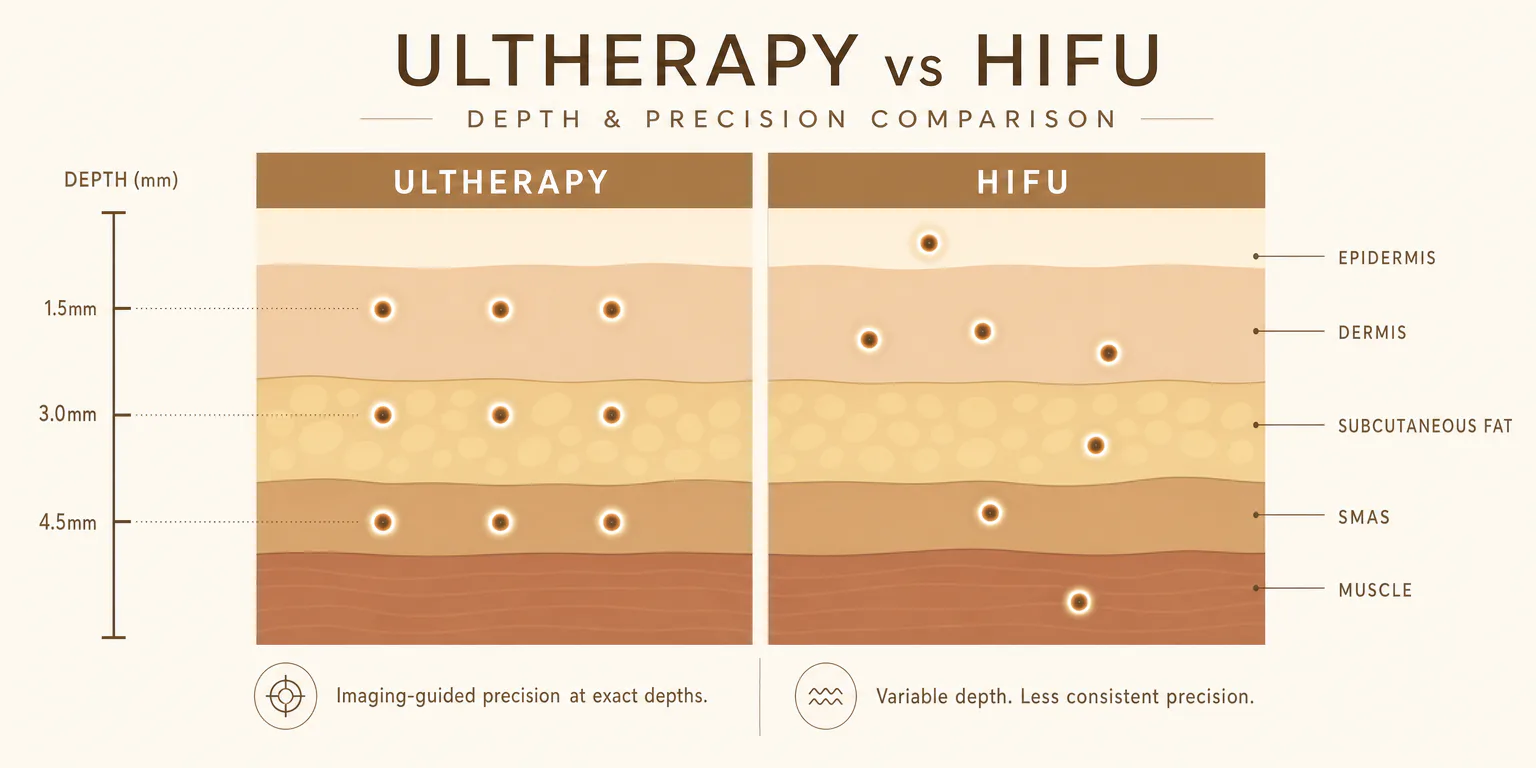
Both deliver focused ultrasound — but the difference is consistency. Ultherapy's real-time imaging places energy at exact depths (1.5mm, 3.0mm and 4.5mm, reaching the SMAS), while generic HIFU fires without visualisation, so depth and placement are more variable.
Decision Guide
Which Treatment Is Right for You?
The right choice depends on what you value most — reliability and proof, or the lowest upfront price. Here's a practical guide:
Choose Ultherapy If:
- You want the most reliable, evidence-backed non-surgical lift
- You value imaging-guided precision so energy reaches the right layer
- You want dependable access to the 4.5mm SMAS layer for genuine lifting
- You prefer an FDA-cleared, TGA-approved device with extensive clinical data
- You want longer-lasting results (typically 1–2 years)
- Peace of mind about a genuine, certified device matters to you
Generic HIFU May Suit You If:
- The lowest upfront price is your main priority
- You understand and accept the trade-off in consistency
- You've verified the specific device is reputable and well-maintained
- You've confirmed the operator is experienced with that machine
- You're comfortable with results that may last a shorter period
- You're treating mild laxity and want an entry-level tightening option
Compare like for like: when a clinic quotes a low “HIFU” price, ask what device they use and whether it offers real-time imaging. The headline figure rarely tells the whole story. If you'd like an honest assessment of whether Ultherapy is right for your skin, our practitioners at our Sydney CBD clinic will give you a straight answer — including when a different treatment would serve you better. You can also see how Ultherapy compares to radiofrequency on our Ultherapy vs Thermage guide, or read the full Ultherapy Sydney treatment page.
Common Questions
Frequently Asked Questions
Not quite. Ultherapy is a specific, brand-name device that uses micro-focused ultrasound (MFU) — and it is the only such device with real-time ultrasound imaging, so the practitioner can see the exact tissue layer before delivering energy. 'HIFU' (High-Intensity Focused Ultrasound) is a generic umbrella term covering many different machines, most of which fire blind without imaging. So while Ultherapy is technically a form of focused ultrasound, not every HIFU device offers the precision, depth control, or clinical evidence that Ultherapy does.
The defining difference is imaging and consistency. Ultherapy's DepthSEE visualisation lets the practitioner see the dermis and SMAS layer in real time, so energy is placed precisely at 1.5mm, 3.0mm and 4.5mm depths. Generic HIFU devices apply energy without seeing the tissue, which can mean energy delivered too shallow (less lifting) or too deep (more discomfort and risk). Ultherapy is also FDA-cleared and TGA-approved with extensive clinical data, whereas generic HIFU devices vary widely in quality, calibration and regulatory clearance.
For lifting reliability and safety, most practitioners consider Ultherapy the gold standard. Its real-time imaging, precise multi-depth transducers, and large body of clinical evidence make results more predictable. Generic HIFU is usually cheaper, which is its main appeal, but the trade-off is variability — outcomes depend heavily on the specific device and operator, and counterfeit or poorly maintained machines are a known issue in the market. If your priority is a dependable, evidence-backed lift, Ultherapy is the stronger choice.
Ultherapy costs more because you are paying for the genuine device, single-use transducers calibrated to precise depths, real-time imaging, and a practitioner trained and certified on the platform. Generic HIFU devices are cheaper to buy and run, which is why some clinics can offer lower prices — but that lower cost can reflect older technology, no imaging, reused tips, or unverified machines. With Ultherapy you are paying for consistency, safety and FDA-cleared technology rather than just an ultrasound 'facial'.
A high-quality HIFU device in skilled hands can produce tightening, and some patients are happy with the results. However, because most HIFU machines fire without imaging, the depth and placement of energy is less controlled, so results are less predictable than Ultherapy. Ultherapy's ability to reliably reach the 4.5mm SMAS layer — the same support layer lifted in a facelift — is what gives it the edge for genuine lifting rather than surface-level tightening.
Both deliver focused heat to deeper layers, so a warm, prickling sensation during treatment is normal. Because Ultherapy places energy precisely where it is intended, discomfort is controlled and predictable, and the newer Ultherapy with Prime technology has reduced sensation considerably. With generic HIFU, comfort varies by device — energy delivered too deep without imaging can feel sharper. At 99 Medispa, our practitioners adjust intensity to your tolerance and can pause at any time.
Ultherapy results typically last 1–2 years from a single annual session, with improvement building over 2–3 months as new collagen forms. Generic HIFU results are often quoted at 6–12 months, though this varies widely by device and how accurately the energy was delivered. The more precisely energy reaches the target layer, the more durable the collagen response — another reason Ultherapy's imaging-guided approach tends to produce longer-lasting results.
Ask the clinic directly whether the device is genuine Merz Ultherapy, and look for the practitioner using a real-time ultrasound imaging screen during treatment — this is unique to Ultherapy. Counterfeit and 'Ultherapy-style' devices do exist, so it matters to choose a certified, registered provider. 99 Medispa is a certified Ultherapy provider using authentic equipment at our Sydney CBD clinic on York St.
Generic HIFU is usually advertised at a lower price point, while Ultherapy is priced higher because it reflects the genuine device, calibrated single-use transducers and imaging. At 99 Medispa, Ultherapy pricing depends on the treatment area and the number of lines required, and we provide a clear personalised quote at your consultation. When comparing prices, look beyond the headline figure to what device is actually being used and whether imaging is included.
If you want the most reliable, evidence-backed non-surgical lift with imaging-guided precision, choose Ultherapy. If budget is the primary driver and you understand the trade-off in consistency, a reputable HIFU treatment may suit you — but verify the device and operator. The best way to decide is a consultation, where a practitioner can assess your skin laxity and recommend the right approach for your goals.
Testimonials
What Our Clients Say
 Google Reviews
Take the Next Step
Get a Straight Answer on Ultherapy vs HIFU
Book a consultation with our specialists at our Sydney CBD clinic. As a certified Ultherapy provider, we'll assess your skin and give you an honest recommendation — including whether Ultherapy, or another treatment, is the right fit for your goals.
Complimentary consultation. No deposit required.
Follow Our Journey
Join our community on Instagram for treatment insights, showcases and current offers.
Booking
Choose a time that suits you
The booking form shows the selected service and available appointment times. Choose a date and time, then follow the prompts to finish.
Questions before booking?
Online booking is loading. If it does not appear, contact our team.