
Jaw Tension & ClenchingTight masseters, grinding and TMJ discomfort explained
Clenching and teeth grinding load the muscles that close the jaw. Jaw joint pain, clicking or locking needs assessment by a dentist, GP or physiotherapist first. At 99 Medispa, EMFACE applies muscle stimulation and radiofrequency heating over the masseter and temporalis muscles.

- 20 minutes
- 4
- None
- Complimentary
The concern
Clenching, grinding and TMJ disorder
Clenching is holding the teeth together under load, often during the day while concentrating or under stress. Grinding is sliding the teeth against each other, and most often happens during sleep. Dentists call habitual grinding and clenching bruxism.
The masseter is the thick muscle at the angle of the jaw, and the temporalis fans across the temple. Both close the jaw. When they work hard for long periods they can feel tight, tender and enlarged, and some people notice a squarer lower face.
TMJ disorder, also called temporomandibular disorder or TMD, is a group of conditions affecting the jaw joint and the muscles around it. Signs include jaw pain, clicking or popping, locking, and limited opening. Causes include bruxism, joint wear, injury and stress.
Jaw joint pain, clicking, locking or limited opening needs assessment by a dentist, GP or physiotherapist. EMFACE does not replace that assessment.
Tight jaw muscles are worth looking at
Waking with a tired or sore jaw, worn or chipped teeth, and tension around the temples are common signs of grinding and clenching. A dentist can check the teeth for wear and advise on a night guard.
A consultation at 99 Medispa covers your jaw history, what your dentist or physiotherapist has already advised, and whether EMFACE fits your plan.
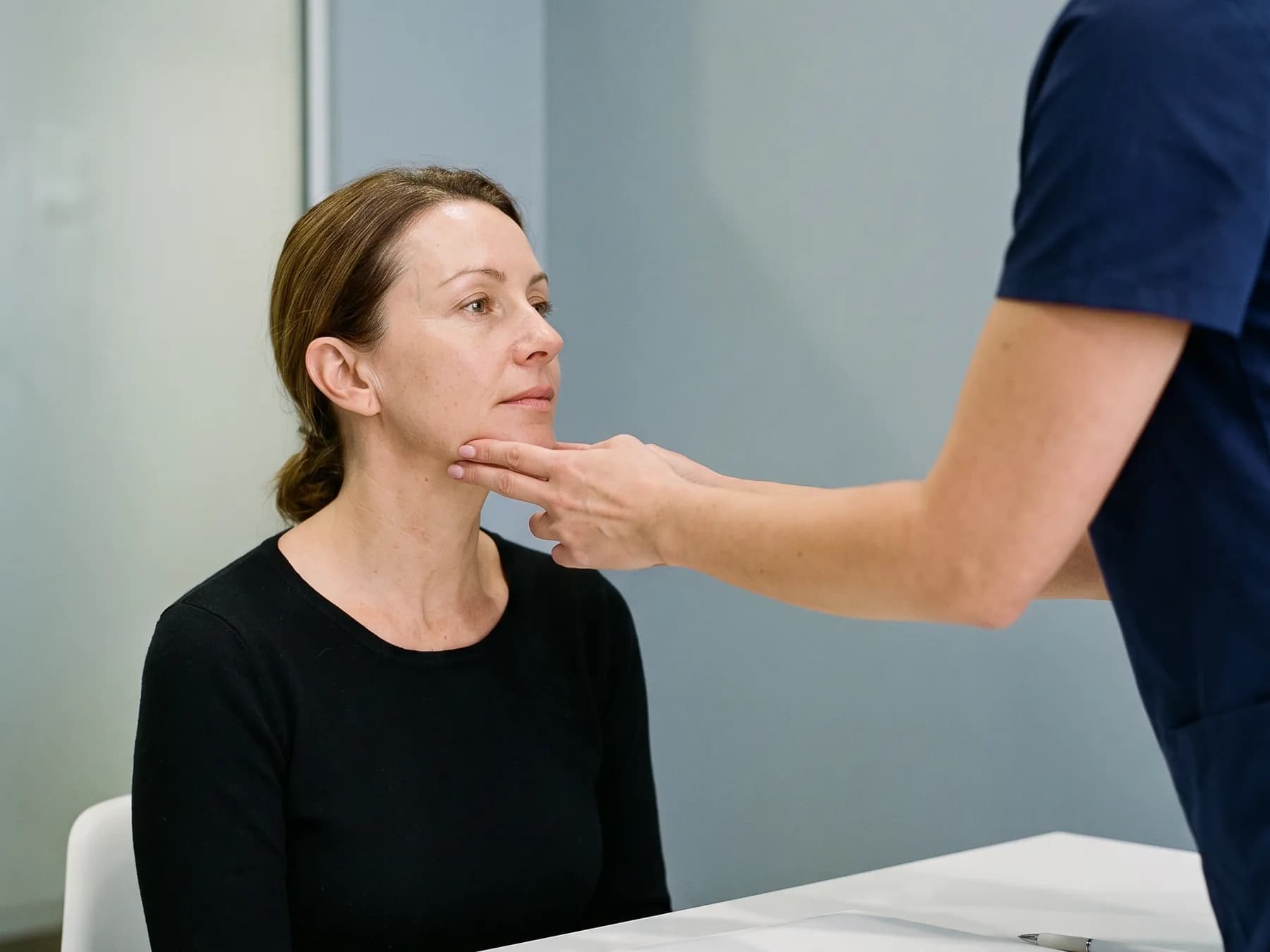 A practitioner talking a client through treatment options at the 99 Medispa consultation desk
Treating it
Jaw tension, clenching and TMJ care compared
We offer EMFACE. Occlusal splints, physiotherapy and stress and habit management are provided by dentists, physiotherapists and other health practitioners.
At 99 Medispa
- EMFACE
EMFACE from BTL Aesthetics delivers two energies through one applicator. HIFES, high-intensity facial electrical stimulation, contracts the facial muscles. Synchronised radiofrequency heats the tissue. Applicators sit over the masseter and temporalis, with no needles and no downtime. A course is four sessions of about 20 minutes.
Elsewhere, not offered here
Occlusal splint or night guard
A dentist fits a custom mouthguard that sits between the teeth and protects them from grinding. It is worn at night and is the usual first step for teeth grinding. Book with your dentist.
Physiotherapy
A physiotherapist trained in jaw and neck care assesses the joint and muscles and sets exercises and manual therapy. This is the right path for clicking, locking and limited opening.
Stress and habit management
Noticing daytime clenching, resting the tongue and teeth apart, limiting caffeine late in the day and winding down before sleep all take load off the jaw. Your GP can point you to further support.
Results and the clinic
EMFACE for the jaw area in Sydney CBD
At 99 Medispa Sydney, EMFACE is performed in the clinic by our practitioners. The applicators are placed over the masseter and temporalis muscles. You feel warmth and rhythmic muscle contractions, then return to your day.
- 20 minutes
- 4
- No
 99 Medispa clinic interior corridor, Sydney CBD
Before you decide
Questions
What is the difference between clenching and teeth grinding?
Clenching is holding the teeth together under load. Grinding is sliding the teeth against each other, usually during sleep. Dentists group both under bruxism.
What are the signs of bruxism?
Common signs are a sore or tired jaw on waking, worn or chipped teeth, tension around the temples and a tight, enlarged masseter. A dentist can confirm bruxism and check the teeth.
What is TMJ disorder?
TMJ disorder, or TMD, is a group of conditions of the jaw joint and surrounding muscles. Signs include jaw pain, clicking, locking and limited opening. It needs assessment by a dentist, GP or physiotherapist.
Who treats TMJ disorder and teeth grinding?
Dentists assess teeth grinding and fit night guards. Dentists, GPs and physiotherapists diagnose TMJ disorder. EMFACE stimulates the jaw muscles and sits alongside that care.
What does EMFACE do over the jaw muscles?
EMFACE applies HIFES muscle stimulation and synchronised radiofrequency heating through one applicator. For this area the applicators sit over the masseter and temporalis muscles.
How long is an EMFACE session?
A session takes about 20 minutes and a course is four sessions. There are no needles and no downtime.
How do I book a consultation?
Book Your Consultation at 99 Medispa in Sydney CBD. A practitioner will go through your jaw history and tell you whether EMFACE fits alongside the care from your dentist or physiotherapist.
Your consultation
We ask about your jaw history, your teeth and any care you already have. We then go through the options that suit you.
- 99 York St, Sydney CBD
- EMFACE
- 4 sessions of 20 minutes
Related pages
Flexible payment options
We offer payment plans with TLC, Zip and Afterpay. Ask us at your consultation for details.


Start with a consultation
A practitioner assesses your concern and recommends the treatment that suits it.
Complimentary consultation. No deposit required.