
Spider Veins & Broken Capillaries
Visible veins on the face and legs are among the most common vascular concerns. Fotona's Nd:YAG laser targets these vessels and collapses them without damaging the surrounding tissue.
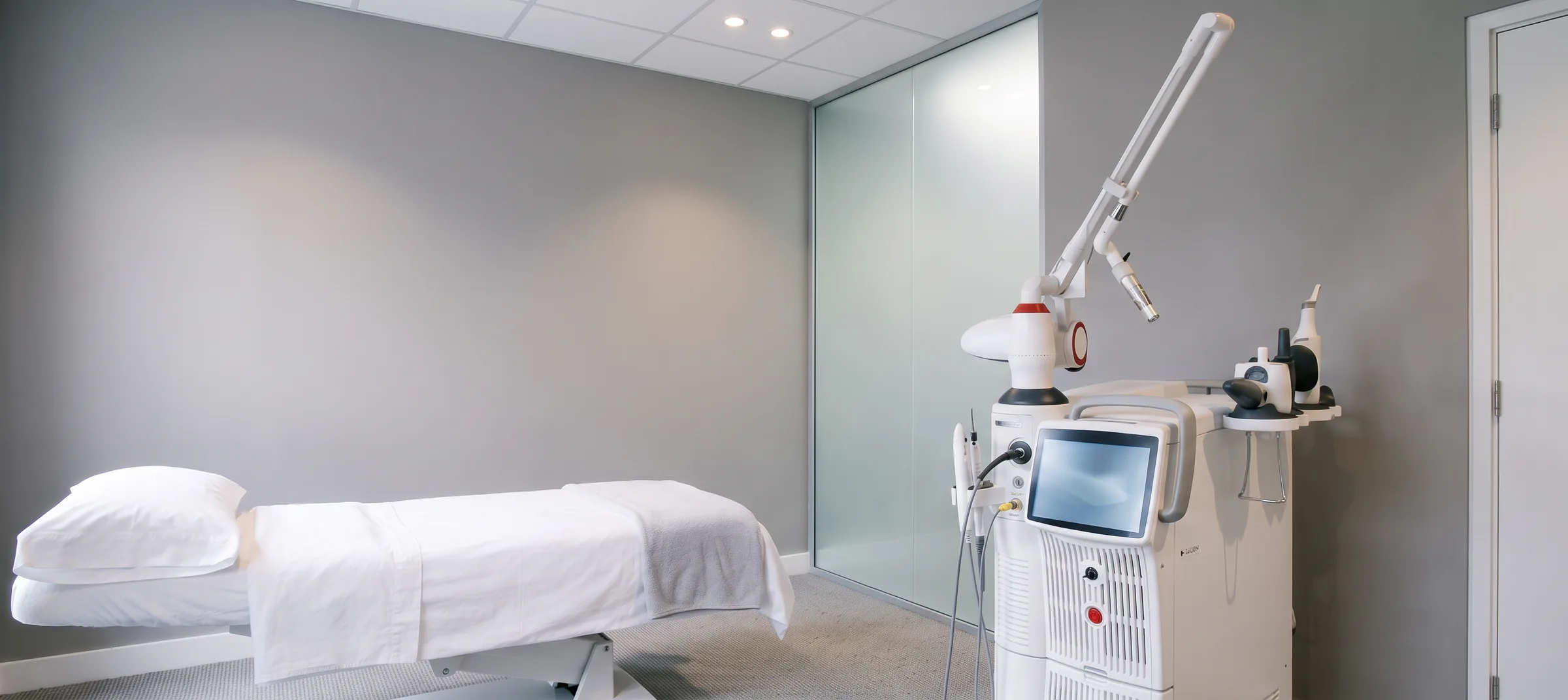
- From 3
- 2–6 weeks
- None to minimal
- Complimentary
The concern
What causes visible veins and capillaries
Spider veins (telangiectasia) are dilated superficial blood vessels, typically 0.5-1mm in diameter, that become visible through the skin. On the legs, they often appear as red, blue, or purple clusters in a web-like pattern. They develop when the one-way valves in small veins weaken, allowing blood to pool and the vessel to expand permanently.
Broken capillaries (facial telangiectasia) appear on the face, particularly around the nose, cheeks, and chin, as fine red or purple lines. The name is misleading: these capillaries are permanently dilated and not broken. Triggers include sun damage, rosacea, alcohol consumption, temperature extremes, hormonal changes, and genetic predisposition.
Risk factors include prolonged standing (leg veins), family history, pregnancy, hormonal changes, sun exposure (facial capillaries), and rosacea. While spider veins and broken capillaries are primarily cosmetic concerns, they can occasionally indicate underlying venous insufficiency in the legs.
Visible veins do not resolve on their own
Once a vein or capillary has permanently dilated, it will not return to its normal size. Without treatment, spider veins tend to increase in number and visibility over time. Sun exposure accelerates the development of facial capillaries, and hormonal changes (pregnancy, menopause) often trigger new ones.
Vascular laser treatment targets individual vessels. Once the body has reabsorbed a treated vessel it does not come back, but new veins and capillaries can still form, especially with sun exposure or hormonal change.
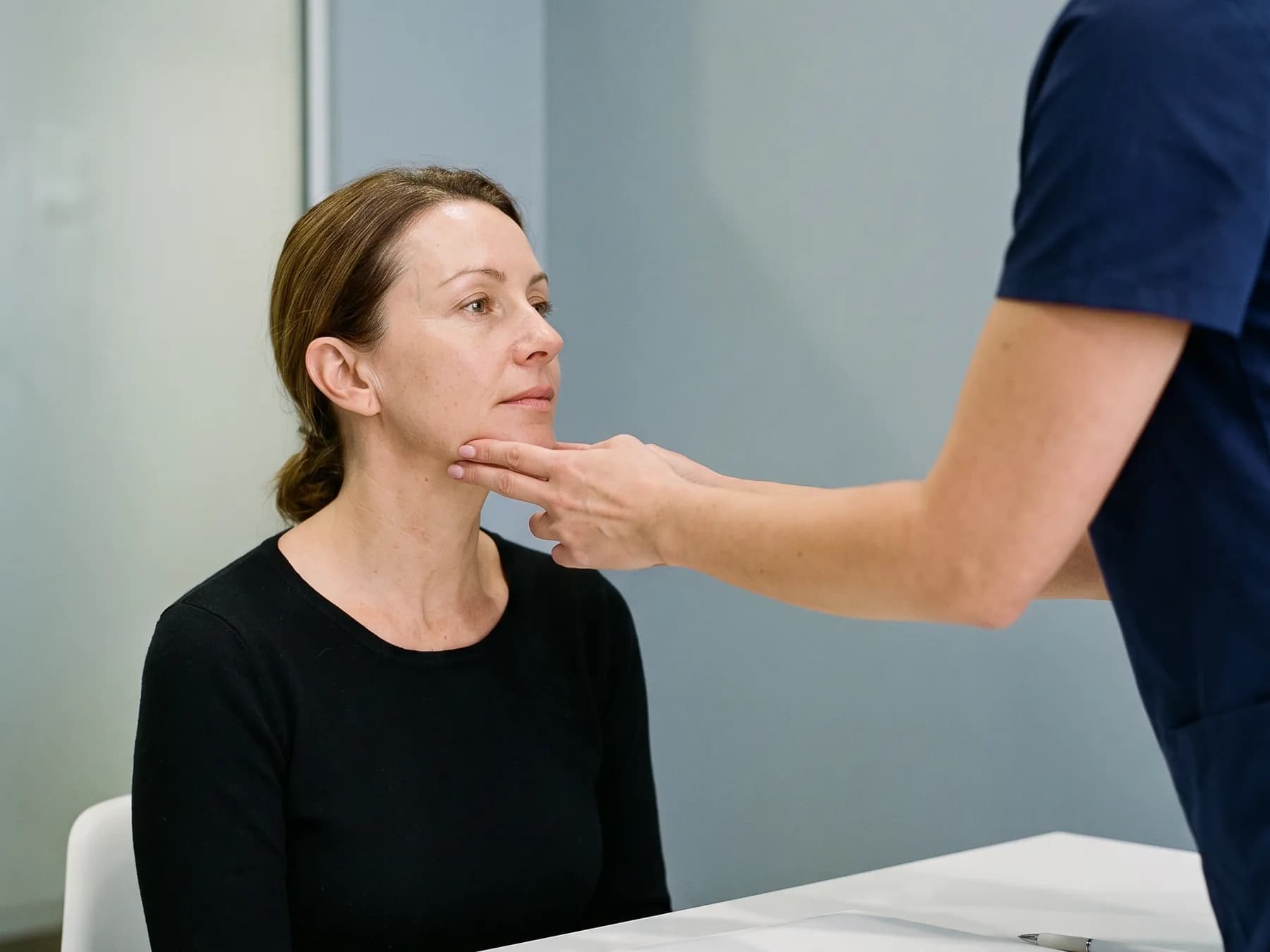 A practitioner talking a client through treatment options at the 99 Medispa consultation desk
Treating it
Vascular treatments compared
We offer Fotona Nd:YAG vascular laser. Sclerotherapy, IPL and thermocoagulation are available elsewhere, and we list them so you can compare.
At 99 Medispa
- Fotona Nd:YAG
Fotona's 1064nm Nd:YAG laser is used for vascular lesion treatment. The wavelength is preferentially absorbed by haemoglobin in the blood vessel, heating the vessel wall and causing it to collapse and seal. The body then naturally reabsorbs the treated vessel over the following weeks. The Nd:YAG wavelength penetrates deep enough to treat both facial capillaries and leg spider veins, and suits all skin types. Each vessel is traced individually with the laser beam.
Elsewhere, not offered here
Sclerotherapy
Sclerotherapy involves injecting a chemical solution (sclerosant) directly into spider veins using a fine needle. The solution irritates the vessel lining, causing it to swell, stick together, and eventually be reabsorbed. It is commonly used for leg spider veins larger than 1mm and is often used alongside laser for comprehensive treatment. Compression stockings are worn for 1–2 weeks afterward.
IPL
IPL uses broad-spectrum light to target haemoglobin in superficial blood vessels. While effective for diffuse facial redness and fine capillaries, IPL is less precise than the Nd:YAG laser for targeting individual vessels and less effective for deeper or larger spider veins on the legs. Multiple sessions are typically required.
Thermocoagulation
Thermocoagulation (e.g., VeinGogh) uses a fine needle to deliver radiofrequency energy directly into tiny capillaries, instantly coagulating them. It is effective for very fine telangiectasia on the face, particularly around the nose. However, it treats one vessel at a time and is impractical for larger or deeper veins.
One package covers every follow-up session
The package includes the follow-up sessions your veins need, so you do not pay per session. Treated vessels do not return, but new ones can form.
Results and the clinic
Before and after
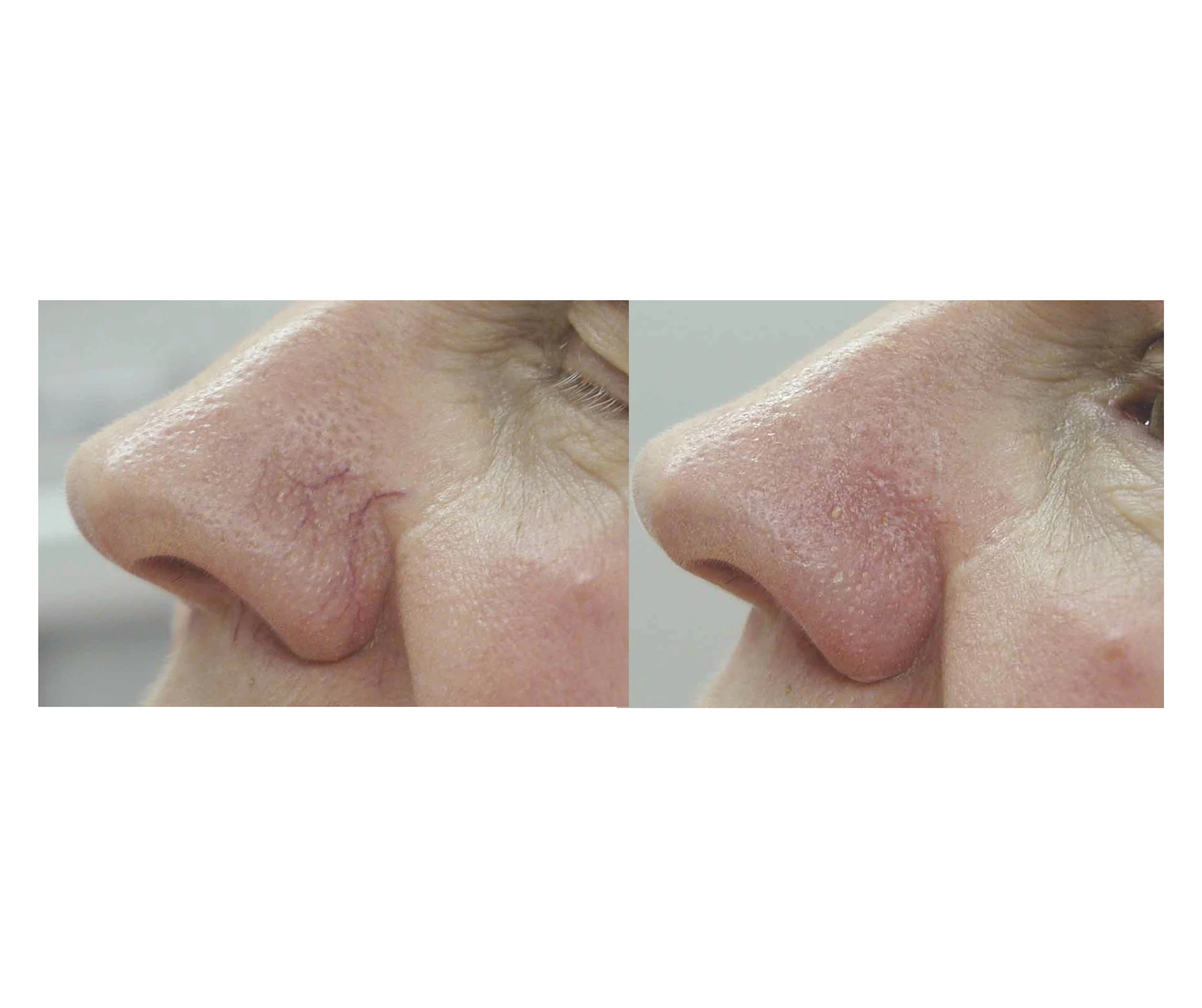
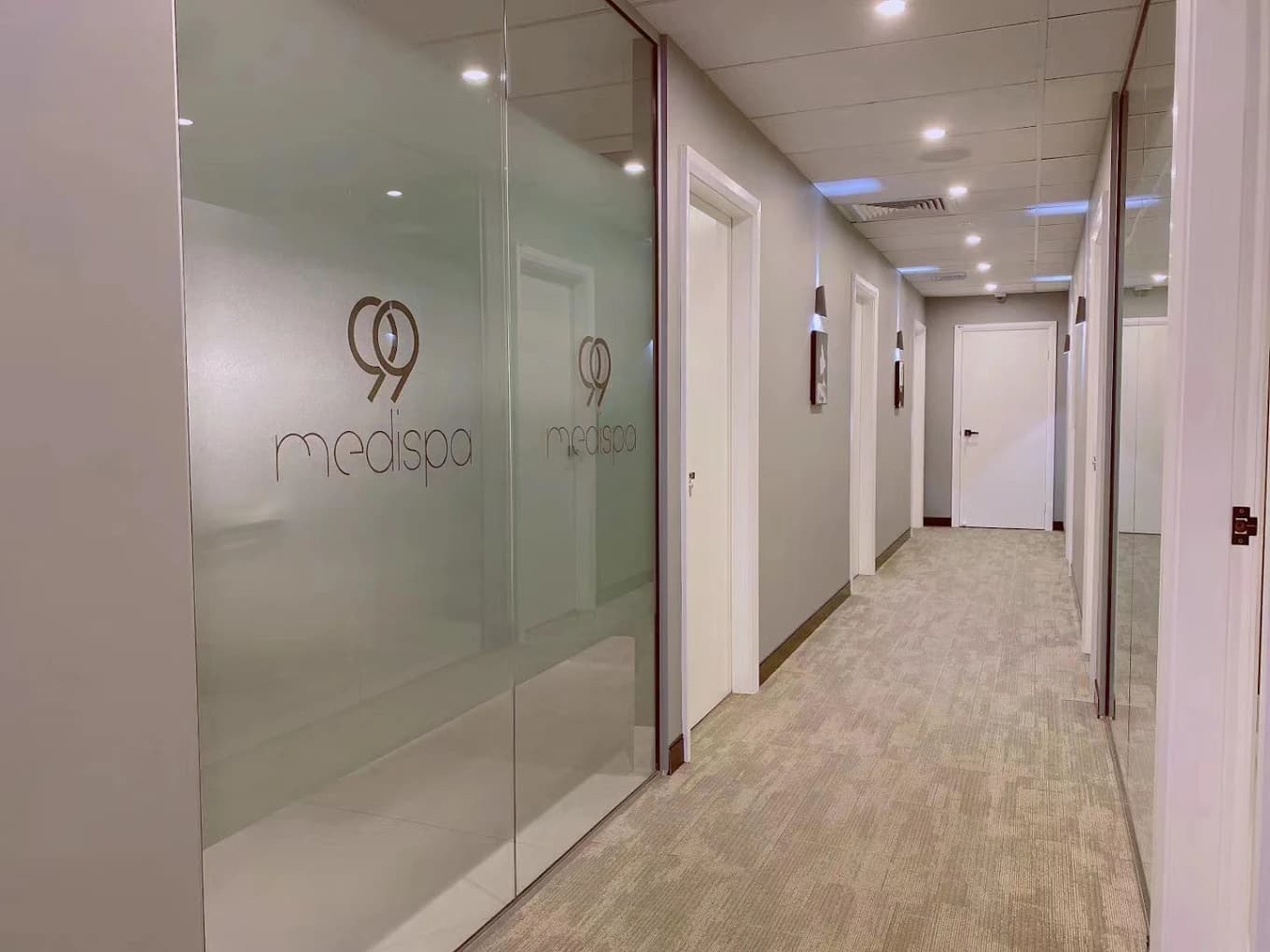 99 Medispa clinic interior corridor, Sydney CBD
Before you decide
Questions
What are spider veins and broken capillaries?
Spider veins and facial capillaries are permanently dilated superficial blood vessels that become visible through the skin. They commonly appear on the legs, nose, cheeks, and chin. Genetics, pregnancy, hormonal changes, sun exposure, rosacea, and prolonged standing can contribute.
What treatment is available for spider veins and broken capillaries?
99 Medispa offers Fotona Nd:YAG vascular laser. Its 1064nm wavelength is absorbed by haemoglobin in the visible vessel, heating the vessel wall so it collapses and seals. The body then naturally reabsorbs the treated vessel over the following weeks.
Is there downtime after vascular laser treatment?
Downtime is none to minimal. Small facial capillaries may improve straight away, while larger spider veins can darken temporarily before fading over 2–6 weeks as the body reabsorbs them.
Who is suitable for vascular laser treatment?
Treatment suits people with visible facial capillaries or leg spider veins who want a non-surgical option. We check the type and depth of your vessels first. Leg veins can occasionally point to underlying venous insufficiency, so we look at that too.
How do I book a spider-vein consultation?
Book a consultation at 99 Medispa in Sydney CBD. We look at your vessels, say whether Fotona Nd:YAG laser suits them, and explain what happens during and after treatment.
Your consultation
At the consultation we look at your visible veins and their type and depth, then give you a plan and quote the package.
- 99 York St, Sydney CBD
- Fotona Nd:YAG
- From 3
Flexible payment options
We offer payment plans with TLC, Zip and Afterpay. Ask us at your consultation for details.



Start with a consultation
A practitioner assesses your concern and recommends the treatment that suits it.
Complimentary consultation. No deposit required.