
Vascular LesionTreatment Redness, rosacea and spider veins
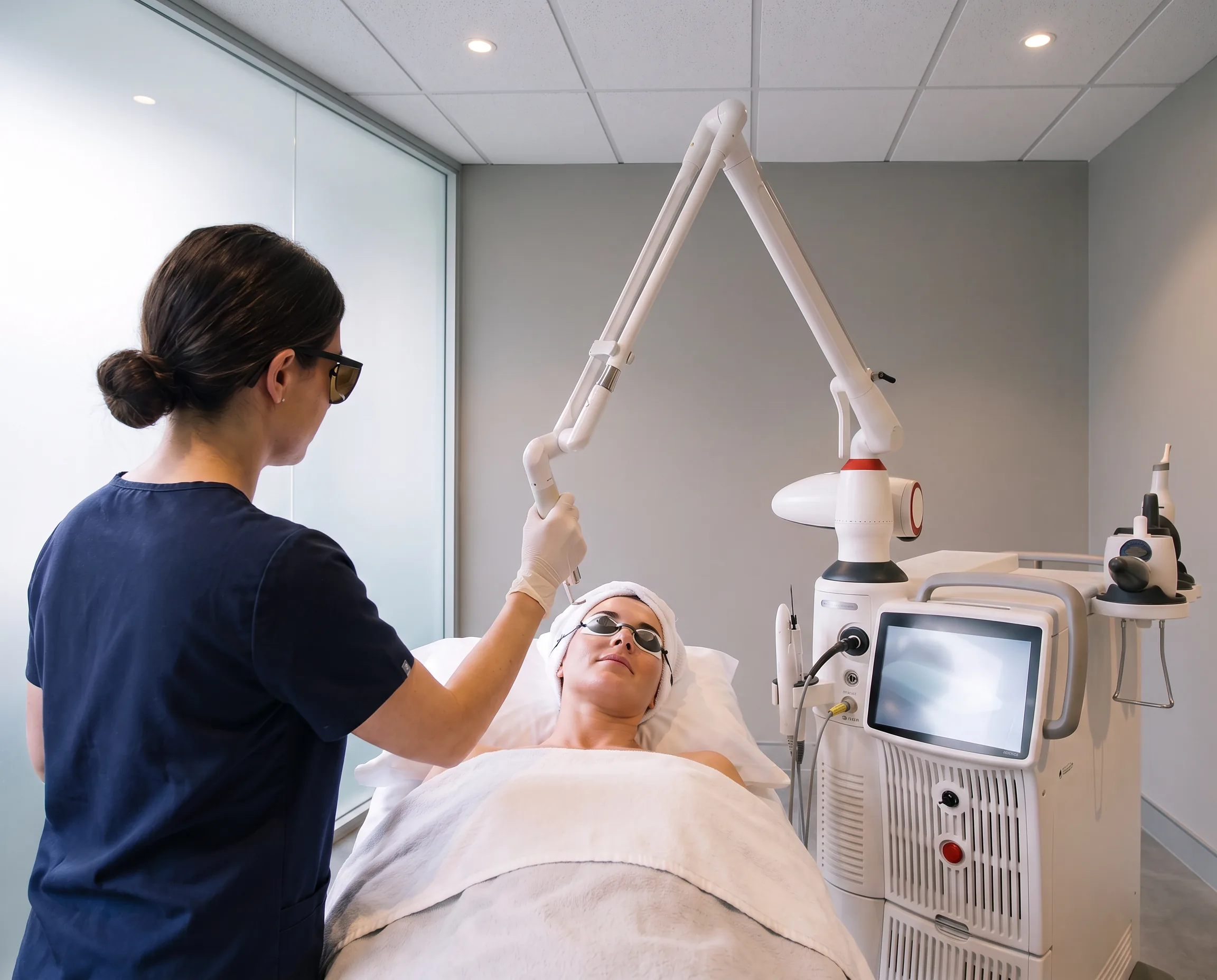
The Fotona Nd:YAG laser targets blood vessels beneath the skin surface. It closes broken capillaries, spider veins, cherry angiomas and the dilated vessels behind facial redness and rosacea, without harming the skin around them.
- 1064nm Nd:YAG
- 1–5 sessions
- Minimal
- All types
How it works
How the laser treats blood vessels without harming the skin around them
Spider veins, broken capillaries, cherry angiomas and rosacea all come from blood vessels that are dilated, malformed or overgrown near the skin surface. The body does not clear them on its own.
The Fotona Nd:YAG laser emits energy at 1064nm, a wavelength that haemoglobin in red blood cells absorbs. The absorbed energy becomes heat and seals the vessel wall. The body then reabsorbs the collapsed vessel over the next two to six weeks.
At 1064nm, little energy is absorbed by melanin (skin pigment), so the beam passes through the skin above the vessel. That makes it suitable across a broad range of skin tones. Vessels clear without scarring or marks on the surrounding skin.
- 1064nm
- 1–5
- Minimal
- 6+
Technology
Fotona Nd:YAG 1064nm laser
How it works
Haemoglobin in the vessel absorbs the laser and the vessel seals
Sessions
1–5 (depends on lesion type and extent)
Treatment time
15–45 minutes
Downtime
Minimal, with mild redness for 1–2 days
Results
Build over 2–6 weeks after each session
Skin types
All skin types (Fitzpatrick I–VI)
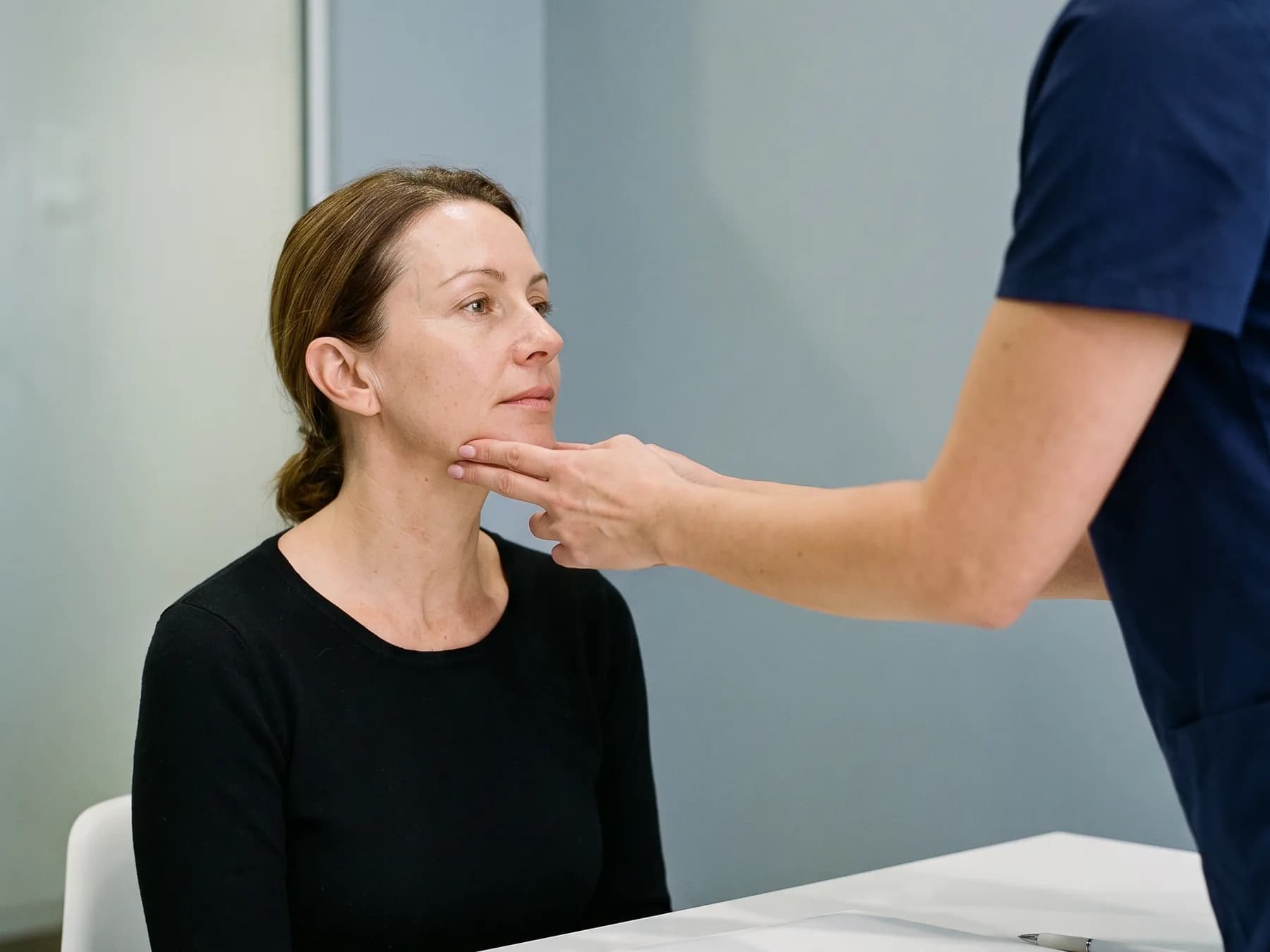 A practitioner talking a client through treatment options at the 99 Medispa consultation desk
Your treatment
Vascular lesions we treat
Facial redness and rosacea
Diffuse redness and rosacea come from long-term widening of small blood vessels just under the skin. The laser is absorbed by the blood in these vessels, which heats and closes them while the skin around them is left alone. Several sessions gradually reduce background redness and flushing.
Spider veins and telangiectasia
Spider veins and telangiectasia are small, widened capillaries visible at the skin surface, commonly on the nose, cheeks and chin. The 1064nm beam passes through the skin and is absorbed by the blood in these vessels, closing them without damaging the skin above.
Cherry angiomas
Cherry angiomas are harmless clusters of widened capillaries that appear as small, bright-red domed bumps. They respond well to the Nd:YAG laser because the dense vessel cluster absorbs the energy readily, and can clear in as few as one to two sessions.
Broken capillaries
Broken capillaries around the nose, cheeks and chin are among the most common vascular concerns. They develop from sun damage, skin trauma, rosacea or genetics. The laser targets individual vessels without leaving marks or bruising on the surrounding skin.
Port wine stains & vascular birthmarks
Port wine stains are vascular birthmarks caused by abnormal capillary development. The laser is absorbed by the blood in the malformed vessels and gradually lightens the mark over a series of treatments. Results vary with the depth, age and location of the mark.
Leg veins
Small superficial leg veins and spider veins on the lower limbs respond well to Nd:YAG treatment. The 1064nm wavelength penetrates deeper than shorter wavelengths, so it reaches vessels below the skin surface. Leg veins typically need a series of sessions, with compression advice alongside.
Cost and the clinic
What our clients say
 Google Reviews
 99 Medispa clinic interior corridor, Sydney CBD
Before you decide
Frequently asked questions
How does Fotona Nd:YAG laser treat vascular lesions?
The laser emits energy at 1064nm, which haemoglobin in red blood cells absorbs. The absorbed energy becomes heat and seals the vessel wall. Over the following weeks the body reabsorbs the collapsed vessel. The beam passes through the overlying skin to reach the vessel, so the surrounding tissue is unaffected.
How many sessions are needed?
It depends on the type, size, depth and extent of the lesion. Isolated cherry angiomas and small broken capillaries may clear in one to two sessions. Diffuse redness and rosacea typically need three to five sessions for significant improvement. Port wine stains and larger birthmarks need more. We give a realistic estimate once we have seen the lesion.
Is vascular laser treatment painful?
Most people describe a brief snap or sting with each pulse, like a rubber band flick. It is momentary, and most vascular treatments need no anaesthetic. The Fotona system cools the skin surface to protect it and improve comfort.
Is there any downtime?
Downtime is minimal. The treated area may be red and mildly swollen for a few hours to a couple of days. Treated vessels may look darker or slightly bruised for a few days before fading, and cherry angiomas may crust briefly. Avoid direct sun for at least two weeks.
How long do results last?
Vessels that are successfully treated do not return. New vessels can form over time, particularly with ongoing sun exposure, rosacea triggers or a family tendency. If you are prone to redness or spider veins, maintenance sessions once or twice a year help sustain results.
Is Fotona vascular laser safe for all skin types?
Yes. The 1064nm wavelength has a low affinity for melanin, so it is safer across a wider range of skin tones than shorter-wavelength vascular lasers. We adjust the laser settings to your skin type and the lesion.
Can vascular treatment be combined with other treatments?
Yes. Vascular treatment is often combined with other Fotona protocols in the same session, such as Fotona 4D or Twinlight for acne-related redness. It can also be done alongside Picosure for pigmentation.
Flexible payment options
We offer payment plans with TLC, Zip and Afterpay. Ask us at your consultation for details.


Book YourConsultation
We assess your vascular lesions and recommend a treatment plan. The consultation is complimentary.
Complimentary consultation. No deposit required.