Sun Damage & Age SpotsAustralia has the highest rate of skin cancer in the world, and sun damage is treatable
99 Medispa treats sun damage and age spots at 99 York St, Sydney CBD, near Town Hall and Wynyard stations, with Picosure and Fotona lasers. Picosure takes 3 to 5 sessions with no significant downtime, and Fotona takes 2 to 4 sessions with minimal to moderate downtime. Consultations are in English, Mandarin and Cantonese.
Years of Australian UV exposure leave age spots, sunspots, uneven tone and textural damage. Picosure and Fotona lasers target the pigment itself, with little or no downtime for Picosure.
- 3–5
- 2–4
- None
- $100
The concern
What types of sun damage are there?
Solar lentigines (age spots, sun spots, liver spots) are flat, brown patches caused by localised melanin overproduction from cumulative UV exposure. They most commonly appear on the face, hands, décolletage and forearms, the areas with the highest lifetime sun exposure. They are benign but indicate significant UV damage to the skin.
Melasma is a deeper, hormonally-influenced pigmentation that presents as symmetrical brown or grey-brown patches, typically on the cheeks, forehead, and upper lip. Melasma, unlike simple sun spots, involves both epidermal and dermal melanin deposits, making it more complex to treat. Hormonal triggers (pregnancy, oral contraceptives) interact with UV exposure to activate melanocytes.
Australia receives some of the highest UV radiation levels on Earth. Two-thirds of Australians will be diagnosed with skin cancer by age 70. While laser treatment addresses cosmetic sun damage, any new or changing pigmented lesion should first be assessed by a dermatologist to rule out melanoma or other skin cancers before cosmetic treatment.
What happens if sun damage is left untreated?
UV-induced pigmentation does not improve on its own. Without treatment, existing spots darken with continued sun exposure, and new spots develop. The underlying collagen damage from UV also progresses, contributing to wrinkles and skin laxity.
Laser treatment can clear or greatly reduce sun spots and age spots. You also need daily SPF 50+, physical barriers and sun-smart habits, or the spots return and new damage builds.
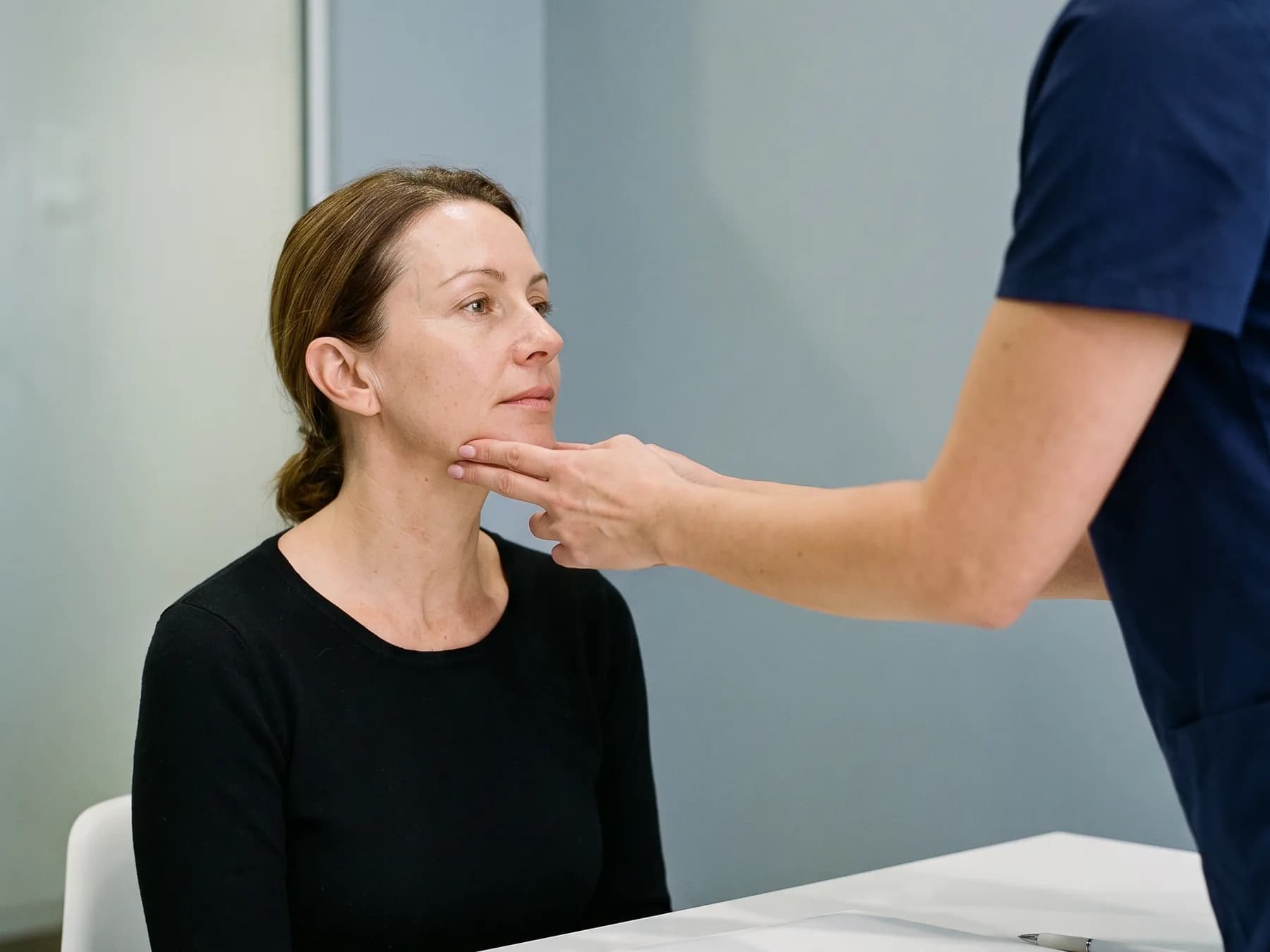 A practitioner talking a client through treatment options at the 99 Medispa consultation desk
Treating it
How do sun damage treatments compare?
We offer Picosure and Fotona lasers. IPL, chemical peels, cryotherapy and topical retinoids are available elsewhere, and we list them so you can compare.
At 99 Medispa
- Picosure
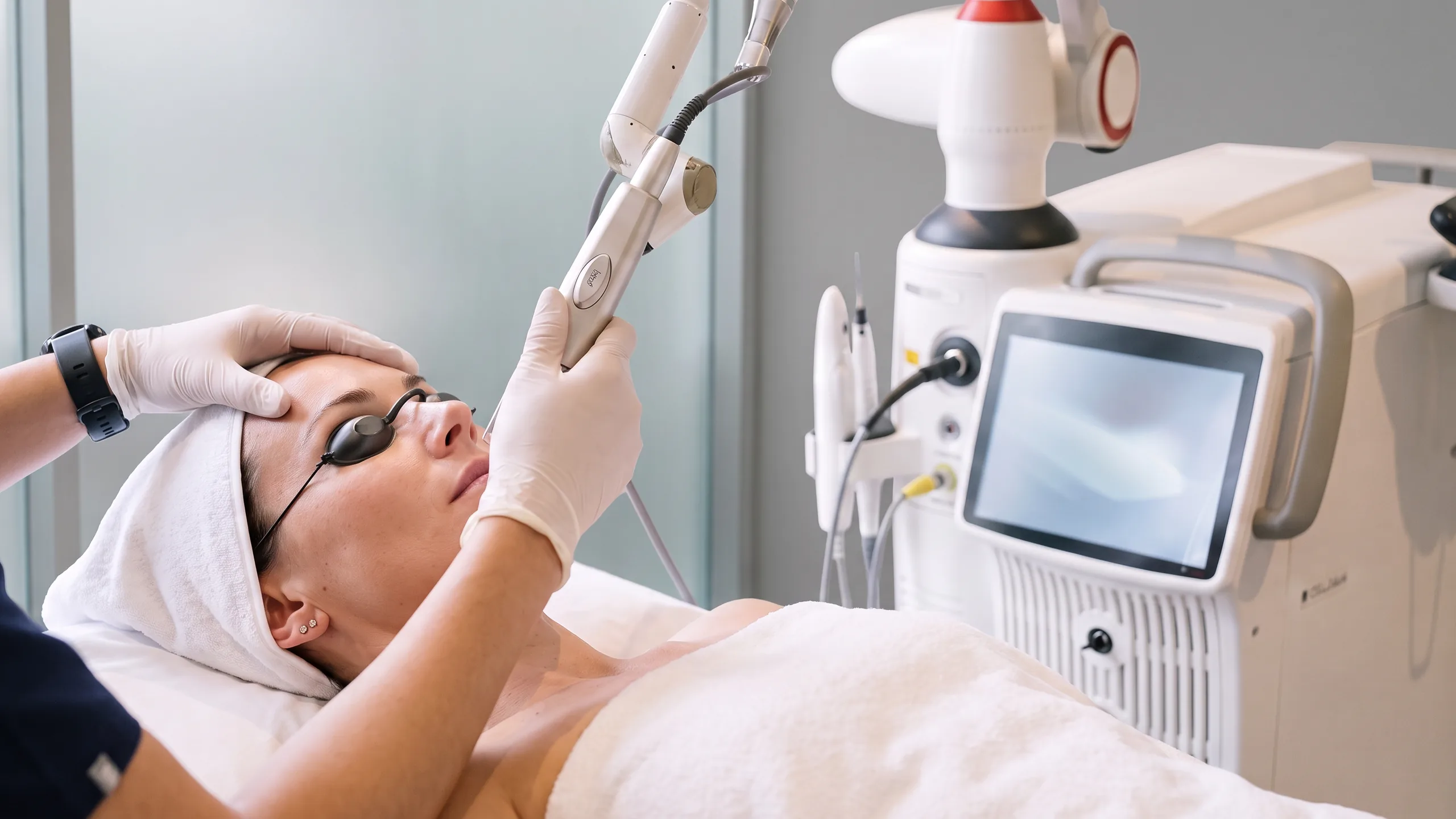
Picosure delivers ultra-short picosecond pulses at 755nm, the ideal wavelength for targeting melanin. The photomechanical impact shatters pigment particles into tiny fragments that the body's lymphatic system can clear, with less heat than older nanosecond lasers. That means fewer sessions and a lower risk of post-inflammatory hyperpigmentation. It works well on solar lentigines, freckles and diffuse sun damage across the face, chest and hands.
- Fotona Laser
Fotona's dual-wavelength system uses two lasers. The Er:YAG laser precisely ablates superficial pigmented lesions by vaporising the pigmented epidermis. The Nd:YAG wavelength penetrates deeper to target dermal pigmentation and stimulate collagen remodelling. This combination addresses both surface spots and the underlying textural damage from chronic sun exposure. Fotona suits thicker or more resistant pigmented lesions.
Elsewhere, not offered here
IPL
IPL uses broad-spectrum light filtered to target melanin. It is effective for diffuse sun damage and can treat larger areas quickly. Treated spots typically darken, crust, and flake off over 7–10 days. However, IPL is less precise than laser wavelengths, requires more sessions, and carries higher risk of burns and pigmentation changes on darker skin tones.
Chemical Peels
Chemical peels (glycolic acid, TCA, Jessner's) accelerate cell turnover to shed the pigmented outer layers of skin. They work for mild to moderate sun damage and improve overall skin texture. Deeper peels give stronger results but need more downtime. Multiple sessions are typically needed for significant pigmentation reduction.
Cryotherapy
Liquid nitrogen cryotherapy freezes individual sun spots, causing the pigmented cells to die and slough off over 1–2 weeks. It is quick, inexpensive, and effective for isolated spots. However, it offers less precision than laser, can cause hypo- or hyperpigmentation scarring, and is not practical for treating numerous or widespread sun spots.
Topical Retinoids
Prescription-strength retinoids (tretinoin) and hydroquinone are the best-evidenced topical treatments for pigmentation. Retinoids accelerate cell turnover, while hydroquinone inhibits melanin production. Used together, they can gradually lighten sun spots over 3–6 months. They work best as maintenance alongside laser, and are rarely enough alone for significant sun damage.
Pigmentation treatment in Sydney
Sun spots are one of several pigmentation types. Read the pigmentation treatment guide to see how sun spots, melasma, freckles and post-inflammatory marks differ.
Explore pigmentation treatmentResults and the clinic
Picosure and Fotona for sun damage
At 99 Medispa Sydney, we use the Picosure picosecond laser and Fotona's dual-wavelength laser to treat sun damage. We choose settings and treatments that reduce the risk of rebound pigmentation.
- 3–5
- TGA & FDA
- 2
Before you decide
Questions
What are sun damage and age spots?
Sun spots, age spots, and solar lentigines are flat brown patches caused by localised melanin overproduction after cumulative UV exposure. They commonly appear on the face, hands, décolletage, and forearms. New or changing pigmented lesions should be assessed by a dermatologist before cosmetic treatment.
What treatments are available for sun damage and age spots?
99 Medispa offers Picosure picosecond laser and Fotona dual-wavelength laser. Picosure shatters pigment particles with photomechanical pulses and is suited to sun spots, freckles, and diffuse damage. Fotona can address thicker or more resistant lesions and support collagen remodelling for associated textural damage.
Is there downtime after sun-damage treatment?
Picosure has no significant downtime and Fotona has minimal to moderate downtime, which increases with treatment depth. After Picosure, mild redness can last a few hours and treated spots may darken before fading. Wear SPF 50+ daily and avoid direct sun after treatment.
Who is suitable for cosmetic sun-damage treatment?
Treatment suits people with benign sun spots, age spots, freckles, uneven tone or textural sun damage. We set the laser plan for your skin tone and pigment depth. Any new, changing or suspicious pigmented lesion needs a dermatologist's check before cosmetic laser.
How do I book a sun-damage consultation?
Book a consultation at 99 Medispa in Sydney CBD. Consultations are in English, Mandarin and Cantonese. We look at your pigmentation type and skin tone, confirm whether cosmetic laser suits you, and give you a plan with sun-protection advice.
Where can I get sun damage treatment in Sydney?
99 Medispa treats sun damage and age spots at 99 York St, Sydney CBD, near Town Hall and Wynyard stations. The clinic uses Picosure (3 to 5 sessions) and Fotona (2 to 4 sessions), with consultations in English, Mandarin and Cantonese.
Is sun damage treatment worth it?
Treatment is worth considering if benign sun spots, age spots or freckles bother you and you will wear SPF 50+ daily, because the spots return and new damage builds without sun protection. Picosure and Fotona target the pigment itself, and Picosure has no significant downtime. Any new or changing pigmented lesion needs a dermatologist's check before cosmetic laser.
Your consultation
At the consultation we look at your sun damage, pigmentation type and skin tone, then choose the laser and settings that fit. We also cover the sun protection that keeps your results.
- 99 York St, Sydney CBD
- Picosure + Fotona
- 3–5 typical
Related pages
Flexible payment options
We offer payment plans with TLC, Zip and Afterpay. Ask us at your consultation for details.


Start with a consultation
A practitioner assesses your concern and recommends the treatment that suits it.
$100 consultation fee, redeemable on treatment.